
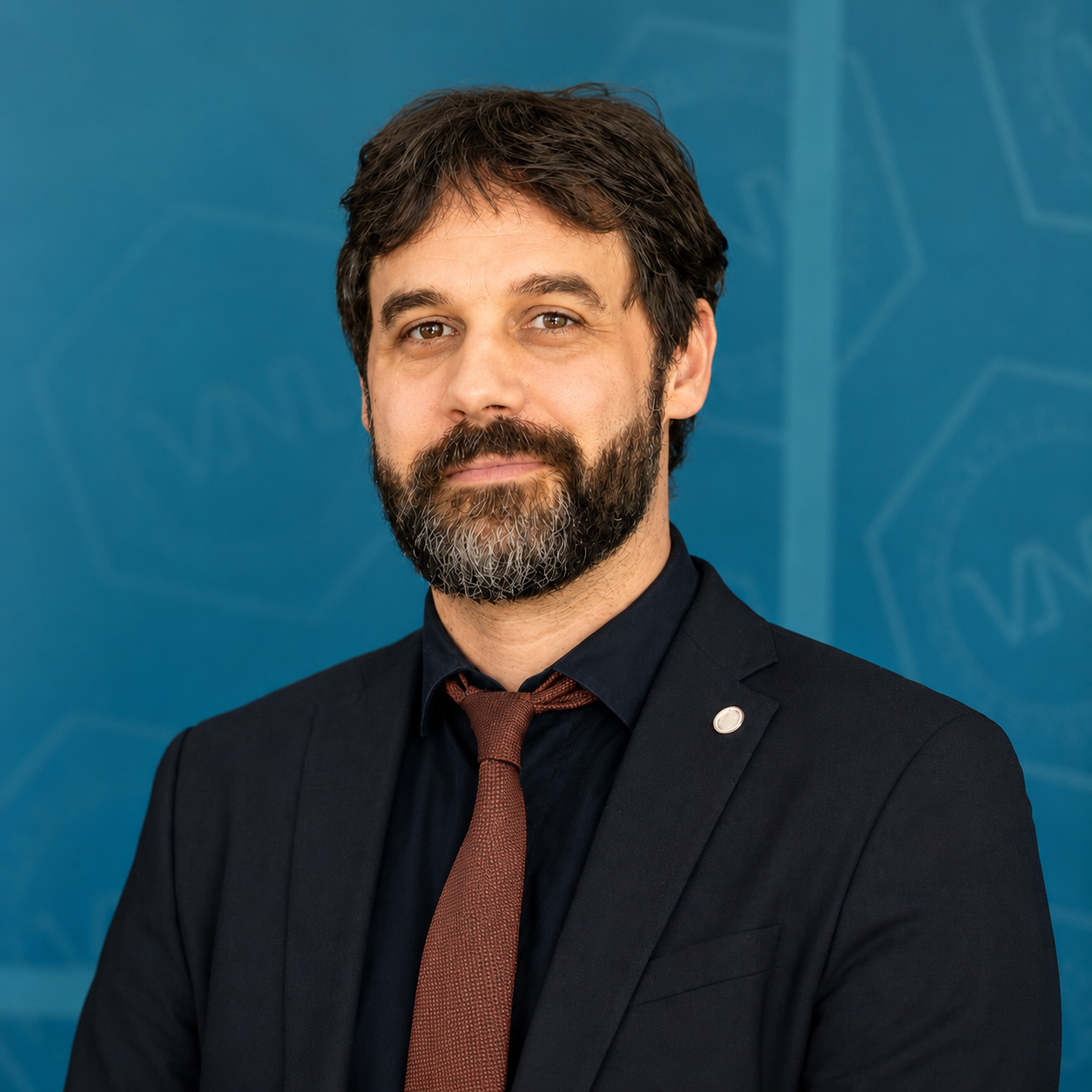
Gábor Kemenesi Dr., Director, Event Host
Director, National Laboratory of Virology, Hungary Gábor Kemenesi is a virologist, Associate Professor, and Director of the National Laboratory of Virology at the University of Pécs. His research focuses on zoonotic and emerging viruses and their natural hosts. His work combines outbreak investigation, disease ecology, and the development of novel diagnostic methods with classical virological research on highly pathogenic viruses, including work conducted in BSL-4 laboratory environments. His scientific achievements are reflected in numerous publications and have also been recognised with the prestigious Junior Prima Award. He strongly advocates interdisciplinary and holistic approaches to understand better the emergence, transmission, and public health significance of viral diseases.

Kornélia Kurucz Dr., Main Organizer
Assistant Professor, Research Fellow, University of Pécs, National Laboratory of Virology, Hungary Kornélia Kurucz is a biologist with a PhD in the field of ecology. She currently works as an assistant professor at the University of Pécs in Hungary and leads the Disease Vector and Disease Ecology Research Group at the National Laboratory of Virology. Her scientific interests have always focused on urban ecology and human–animal interactions; accordingly, her research activities primarily aim to understand the ecological background of zoonoses and vector-borne diseases. She coordinates and participates in several projects related to vector ecology and the integrated surveillance of pathogens, with a particular focus on mosquitoes. Her work is closely linked to biosafety through the development of safe laboratory and insectary procedures, risk assessment, pathogen surveillance, and the establishment of containment-based workflows for research involving arthropod vectors.
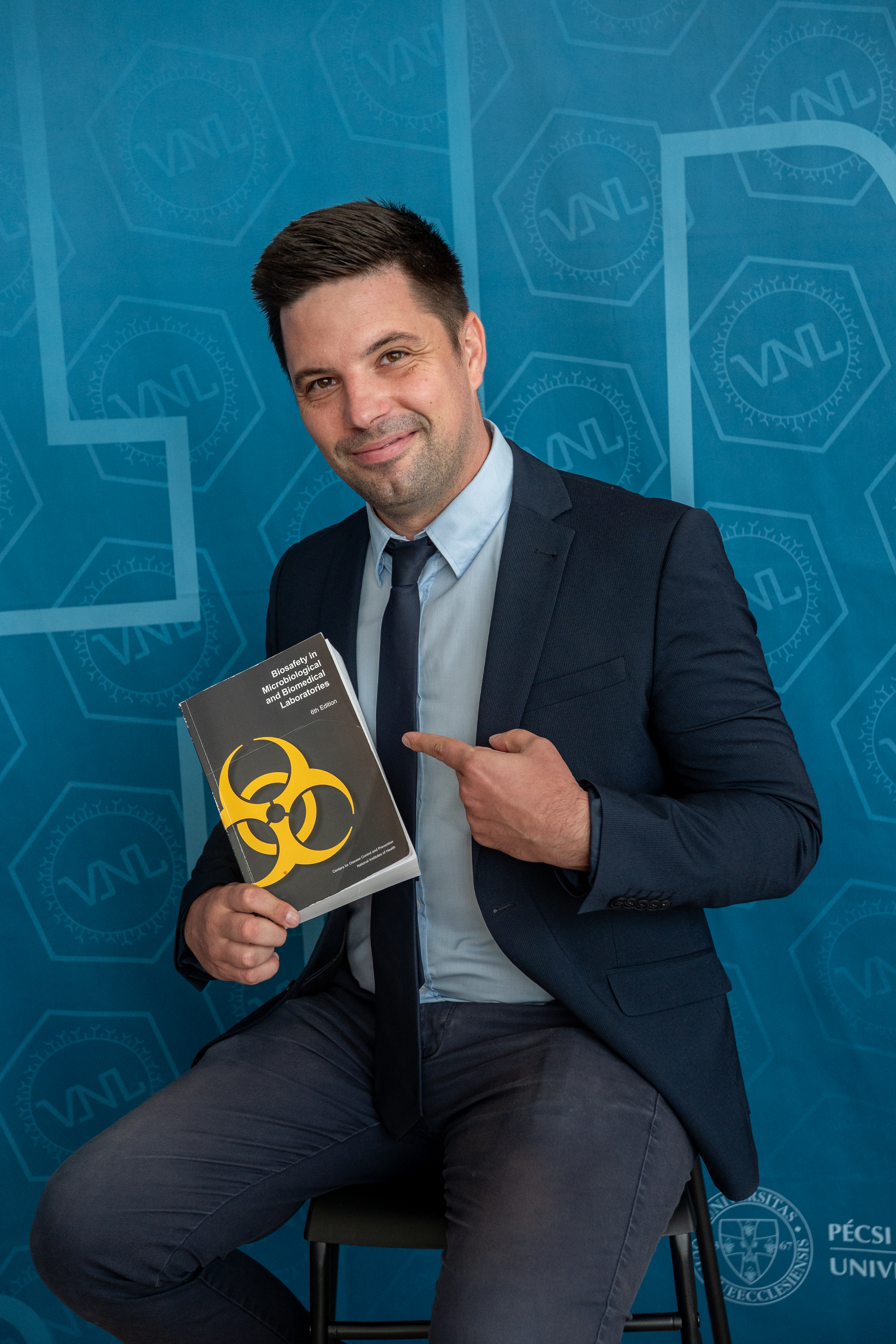
Balázs Somogyi, Main Organizer
Research Fellow, BSL-4 laboratory manager, University of Pécs, National Laboratory of Virology, Hungary Balázs Somogyi earned his MSc degree in Biology in 2015 from the Faculty of Science at the University of Pécs. Before his graduate studies, he was already involved in university research projects during his high school years, where he achieved results primarily in network analysis and small mammal ecology. Throughout his university years, he continued these research projects, gaining outstanding experience in biostatistics supporting ecological research and field study implementation. Building on his expertise in field biology and biostatistics, he joined the Virological Research Group at the Szentágothai Research Centre in 2018. Here, he quickly learned various molecular biology techniques and obtained certification for work in a BSL-4 virology laboratory. In addition to laboratory work, he actively participated in the certification and maintenance operations of the lab. As a result, he became the „biosafety-integrated OH&S” leader of the group in 2020.

Dóra Király, Main Organizer
She participates in the planning, coordination, and execution of the conference, working in collaboration with the professional groups. As a member of the conference’s organizing and management team, he/she supports the coordination of operational activities in consultation with the Project Manager. As the personal assistant to the Professional Lead, she assists with daily organizational tasks, preparing for meetings, compiling schedules, and communicating with team members.

Ágota Ábrahám, Organizer
Ágota Ábrahám: event organizer, Research assistant and PhD Student, National Laboratory of Virology, University of Pécs Ágota Ábrahám is a biologist and PhD student at the University of Pécs, working at the National Laboratory of Virology since 2022. She earned her BSc (2022) and MSc in Molecular Biology (2024) before starting her PhD in 2025. Her research trajectory evolved from the surveillance of bat-related viruses, such as Lloviu virus, to high-consequence pathogens including Crimean-Congo hemorrhagic fever. Within the laboratory, her responsibilities encompass Next-Generation Sequencing (NGS) workflows as well as the development of diagnostic methods for zoonotic diseases and applied biosafety research. Additionally, she serves as a trainer for BSL-4 biosafety operations and practices.
Fatima Ezzohra Ezahedi, Organizer
Phd student, research assistant, virology national laboratory, university of Pécs Fatima Ezzohra Ezahedi is a PhD candidate in Biology at the University of Pécs, Hungary, and a researcher in the Virological Research Group at the Szentágothai Research Centre. Her research focuses on molecular epidemiology, evolution, and surveillance of zoonotic viruses in bat populations, with a particular emphasis on North Africa. She combines field sampling, molecular biology, next-generation sequencing, phylogenetics, and bioinformatics to investigate virus diversity and emergence at the wildlife–human interface. Her work has made biosafety a priority, particularly in the safe handling of wildlife samples, laboratory risk assessment, and the application of best laboratory practices when working with potentially infectious materials. Coming from a region where biosafety infrastructure and training often receive limited attention due to competing priorities, she has become increasingly passionate about advancing biosafety culture and promoting practical, accessible approaches that can be adopted across diverse research environments. She is motivated to help create a high-quality, impactful scientific forum that brings together researchers, biosafety professionals, and policymakers to exchange knowledge, inspire collaboration, and contribute to making biosafety expertise more accessible worldwide.

Krisztina Leiner, Organizer
PhD Student, University of Pécs, National Laboratory of Virology, Hungary Krisztina Leiner is a PhD student at the National Laboratory of Virology, University of Pécs, Hungary, where she joined the research team in 2022. Her research focuses on alphaviruses, particularly Chikungunya virus and Sindbis virus, with an emphasis on the evaluation and characterisation of novel antiviral compounds using in vitro virological approaches. In addition to assessing antiviral efficacy, her work investigates the mechanisms of action of promising compounds, the development of antiviral resistance, and their activity across different cell lines. Prior to joining the laboratory, she contributed to SARS-CoV-2 diagnostic activities during the COVID-19 pandemic, which further strengthened her interest in virology and antiviral research. She has gained practical experience working in BSL-4 laboratory environments and is actively involved in the training and education program for BSL-4 laboratory personnel.

Samir Abderrezag, Organizer
International Coordinator, University of Pécs, Hungary Samir Abderrezag holds a Master’s degree in Strategic Marketing and a Bachelor’s degree in International Business and management. Before joining the National Laboratory of Virology in 2020, he gained extensive professional experience in sales, marketing, and business development, including several positions within the pharmaceutical industry. As an International Coordinator, he supports the development and management of EU-funded projects, particularly under Horizon Europe and Erasmus+. His work covers the entire project lifecycle, including opportunity identification, proposal writing, budgeting, consortium building, submission, implementation, reporting, and dissemination. He also develops project communication strategies and visual identities and applies AI-assisted workflows to improve proposal development and project management.

Gréta Varga, Organizer
Gréta Varga: PhD student, National Laboratory of Virology, University of Pécs Biotechnologist, RoLink Biotechnology Kft., Pécs, Hungary Gréta Varga is a PhD student at the University of Pécs, Hungary, participating in the KDP program, and is employed as a biotechnologist at RoLink Biotechnology Kft. She joined the National Laboratory of Virology in 2023. She received her MSc degree in Molecular Biology in 2025. Her main research focuses on the comprehensive characterization of hantaviruses and the investigation of their pathogenicity. Working with highly pathogenic viruses has provided her practical experience in biosafety and high-containment laboratory practices, therefore in 2025, she obtained certification to work in a BSL-4 laboratory, enabling her to conduct research on high-consequence viral pathogens under maximum biocontainment conditions.

Brigitta Dékány-Zana Dr., Organizer
Research Fellow, University of Pécs, National Laboratory of Virology, Hungary Brigitta Dékány-Zana is a research fellow at the National Laboratory of Virology, University of Pécs, Hungary. Her research focuses on the molecular characterisation of vector-borne human pathogenic and insect-specific viruses, integrating in vitro virological approaches with next-generation sequencing technologies. Her primary research interests include mosquito- and tick-borne viruses and their molecular biology. Working with high-consequence pathogens in BSL-3 and BSL-4 laboratory environments has given her extensive practical experience in biosafety and high-containment research. In addition to her research activities, she is actively involved in the planning and development of a BSL-3 insectary facility, contributing to the implementation of safe infrastructure for vector-borne pathogen research.

Zeghbib Safia Dr., Organizer
Assistant Professor, Research Fellow, University of Pécs, National Laboratory of Virology, Hungary Zeghbib Safia is an Assistant Professor, Research Fellow, and Head of the Virus–Host Interaction Research Group at the National Laboratory of Virology, University of Pécs, Hungary. Her research focuses on emerging viral zoonoses, with particular emphasis on bat-borne viruses, virus–host interactions, viral evolution, and molecular epidemiology within a One Health framework. Her work spans wildlife surveillance, including bat field expeditions in Algeria and Morocco, laboratory investigations, and research on high-consequence pathogens in BSL-4 containment, where the safe handling of zoonotic pathogens and biological samples underscores the importance of biosafety and biosecurity in both field and laboratory settings. The interdisciplinary research group she leads combines bat- and rodent-borne virus research, clinical virology, diagnostics, advanced in vitro infection models, and antiviral development to improve the surveillance, understanding, and control of emerging infectious diseases.

Dániel Hanna Dr., Organizer
Medical doctor who graduated from the University of Pécs in 2020. He currently works as a Research Fellow at the National Laboratory of Virology, where his research focuses on virus inactivation technologies, immunological assay development, and translational virology. He is actively involved in projects aimed at advancing biosafety and biosecurity through the development of UV-C virus inactivation technologies, next-generation immunological assays, and standardized reference materials. His research combines virology, immunology, and biotechnology to support the development of diagnostic tools, vaccine research, and preparedness against emerging infectious diseases. He also contributes to national and international collaborative projects focused on strengthening laboratory capabilities and the safe application of viral materials in biomedical research.